 VipNews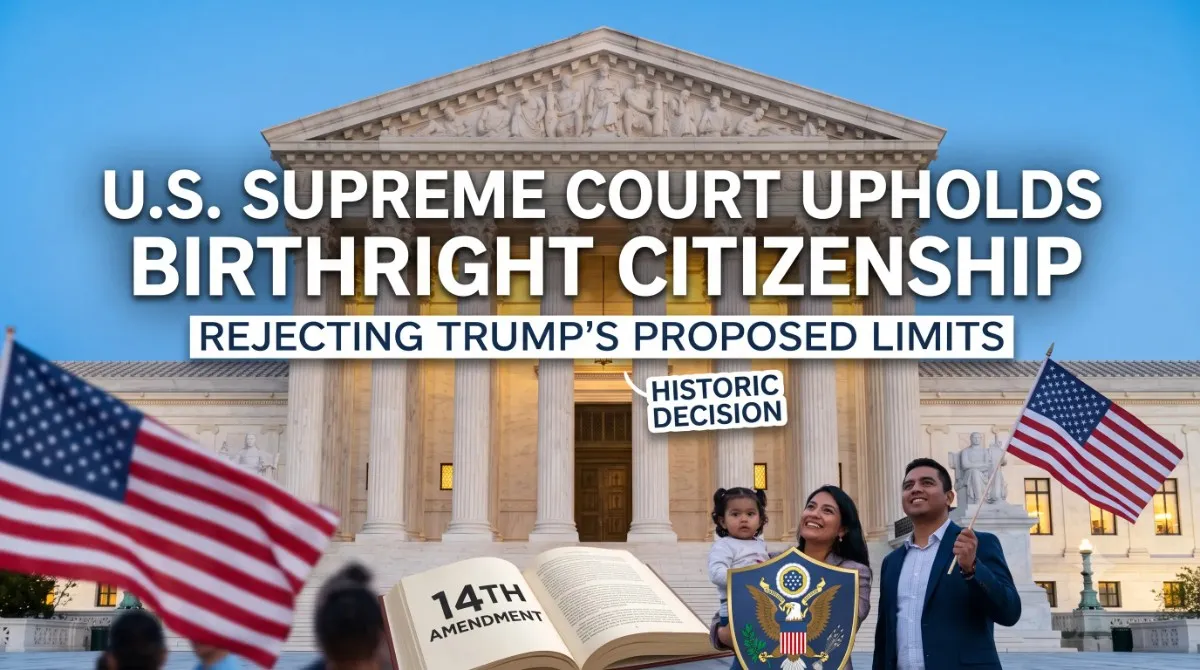
In one of the most significant constitutional rulings on immigration in recent years, the U.S. Supreme Court upheld birthright citizenship, reaffirming that children born on American soil are entitled to U.S. citizenship under the Constitution.
The decision effectively blocks former President Donald Trump's long-standing proposal to limit automatic citizenship for certain children born in the United States. The ruling has sparked nationwide discussions among lawmakers, legal experts, immigrant communities, and constitutional scholars.
Supporters of the judgment argue that it protects one of the country's oldest constitutional guarantees, while critics believe immigration laws should be strengthened through legislative reform rather than judicial interpretation.
This landmark decision could influence future immigration policies, legal challenges, and political campaigns leading into the next election cycle.
What Is Birthright Citizenship?
Birthright citizenship is the legal principle that grants citizenship to nearly every child born within the United States, regardless of the immigration status of their parents.
The right is based on the 14th Amendment of the U.S. Constitution, ratified in 1868, which states:
"All persons born or naturalized in the United States, and subject to the jurisdiction thereof, are citizens of the United States..."
For more than 150 years, this constitutional provision has served as the foundation for American citizenship laws.
Why Did Donald Trump Want to Limit Birthright Citizenship?
Former President Donald Trump has repeatedly argued that the existing interpretation of birthright citizenship encourages illegal immigration and "birth tourism."
His proposal sought to deny automatic citizenship to children born in the United States if neither parent was a U.S. citizen or lawful permanent resident.
Supporters of the proposal claimed the change would discourage unauthorized immigration.
Opponents argued that such a move would violate the Constitution and create millions of stateless or legally uncertain children.
The issue became one of the most debated immigration policies during Trump's presidency and continued to shape political discussions afterward.
Supreme Court's Decision Explained
The Supreme Court declined to accept arguments that would significantly narrow the constitutional interpretation of birthright citizenship.
Instead, the Court reaffirmed that the constitutional guarantee remains in force unless Congress passes a constitutional amendment or the Court overturns more than a century of legal precedent.
Legal experts describe the ruling as a strong affirmation of constitutional stability rather than a political decision.
The judgment reinforces that long-standing constitutional rights cannot easily be altered through executive action alone.
Why This Ruling Matters
The decision has major legal, political, and social implications.
1. Constitutional Protection
The ruling strengthens confidence in constitutional protections established under the Fourteenth Amendment.
2. Immigration Policy
The judgment limits future attempts by presidents to change citizenship rules without congressional action.
3. Families
Millions of immigrant families receive greater legal certainty regarding the citizenship status of children born in the United States.
4. Future Court Cases
Although immigration disputes will continue, this decision creates a stronger legal precedent that future courts are likely to consider.
Historical Background
Birthright citizenship has existed in the United States since the adoption of the Fourteenth Amendment following the Civil War.
One of the most influential Supreme Court cases was United States v. Wong Kim Ark (1898), which confirmed that children born in the United States generally receive citizenship regardless of their parents' nationality.
Since then, the principle has remained one of the cornerstones of American constitutional law.
Political Reactions
The ruling quickly generated strong reactions across the political spectrum.
Supporters of immigrant rights welcomed the decision, calling it a victory for constitutional protections and equal citizenship.
Conservative leaders expressed disappointment, arguing that Congress should revisit immigration laws to address concerns about border security and citizenship policies.
Meanwhile, constitutional scholars noted that the decision reinforces judicial consistency and respect for longstanding legal precedent.
How the Supreme Court Decision Affects Immigrant Families
The Supreme Court's decision provides clarity for millions of families living in the United States. Children born on U.S. soil will continue to receive automatic citizenship under the Constitution, regardless of their parents' immigration status, unless future constitutional changes occur.
For many immigrant families, this ruling removes uncertainty about their children's legal identity. It also ensures continued access to rights and opportunities that come with U.S. citizenship, including education, employment eligibility, voting rights in adulthood, and the ability to obtain a U.S. passport.
Legal experts say the ruling reinforces the long-standing interpretation of the Fourteenth Amendment and reduces the possibility of conflicting citizenship rules across different states.
What Does This Mean for Indian Families Living in the United States?
The decision is particularly relevant for thousands of Indian families residing in the United States on temporary work visas, student visas, dependent visas, or permanent residency pathways.
If a child is born in the United States, that child generally remains entitled to U.S. citizenship under the constitutional principle of birthright citizenship.
However, the ruling does not change the immigration status of the parents. Parents must still follow existing immigration laws regarding visas, employment authorization, or permanent residency.
Many immigration attorneys believe the decision provides additional legal certainty for families planning their future in the United States.
Could Birthright Citizenship Change in the Future?
Although the Supreme Court has reaffirmed birthright citizenship, legal experts say constitutional rights can only be changed through very specific legal processes.
Possible scenarios include:
- A constitutional amendment approved through the U.S. constitutional process.
- A future Supreme Court decision that overturns longstanding precedent.
- New legislation that complies with constitutional requirements.
Such changes would face significant legal and political challenges.
For now, birthright citizenship remains protected under current constitutional interpretation.
Timeline of the Birthright Citizenship Debate
1868
The Fourteenth Amendment becomes part of the U.S. Constitution, establishing birthright citizenship.
1898
The Supreme Court confirms the constitutional principle in the landmark case United States v. Wong Kim Ark.
2016–2020
Donald Trump repeatedly calls for ending or limiting automatic birthright citizenship.
2025–2026
New legal challenges emerge regarding executive authority and immigration policy.
2026
The U.S. Supreme Court upholds birthright citizenship, rejecting attempts to impose the proposed limits.
Why This Decision Is Being Called Historic
Legal scholars describe the ruling as historic because it reinforces one of the most fundamental constitutional protections in the United States.
The decision:
- Preserves more than 150 years of constitutional interpretation.
- Provides nationwide legal consistency.
- Reinforces judicial respect for constitutional precedent.
- Reduces uncertainty surrounding citizenship rights.
- Clarifies the limits of executive authority in changing constitutional protections.
The judgment is expected to influence future immigration debates and constitutional cases for years to come.
What Happens Next?
Although the Supreme Court's ruling settles this particular constitutional question, immigration policy will continue to be a major political issue.
Future discussions are expected to focus on:
- Border security reforms
- Visa modernization
- Legal immigration pathways
- Asylum policies
- Employment-based immigration
- Congressional immigration legislation
Political leaders from both major parties are likely to continue proposing different approaches to immigration reform.
Expert Analysis
Constitutional law experts generally agree that the Supreme Court's decision reinforces judicial consistency and the importance of constitutional precedent.
Immigration policy specialists note that while immigration laws may evolve over time, constitutional guarantees require a much higher legal standard before they can be changed.
The ruling also highlights the distinction between executive policy decisions and constitutional rights protected by the courts.
Conclusion
The Supreme Court's decision to uphold birthright citizenship marks one of the most significant constitutional rulings on immigration in recent years. By rejecting proposed limits on automatic citizenship, the Court has reaffirmed the protections provided under the Fourteenth Amendment and reinforced a legal principle that has shaped the United States for generations.
While political debate over immigration is expected to continue, the ruling provides greater certainty for families, strengthens constitutional stability, and confirms that longstanding constitutional rights cannot be easily changed through executive action alone.
As lawmakers, legal experts, and communities respond to the decision, the ruling will remain a defining moment in the ongoing national conversation about immigration, citizenship, and constitutional law.